


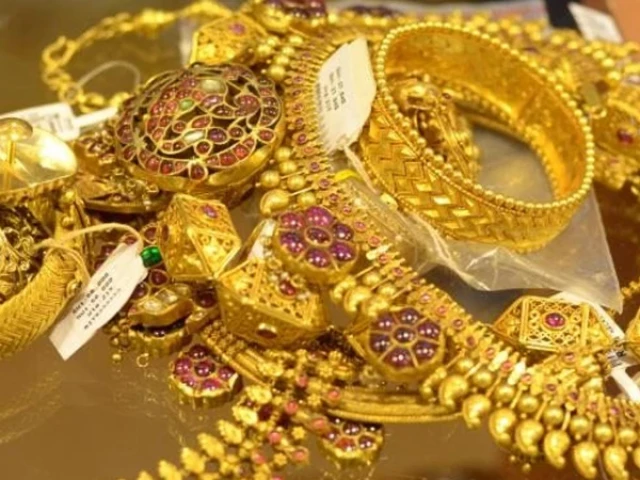
Gold prices have recently soared to unprecedented levels, driven by a confluence of geopolitical tensions and expectations of further interest rate cuts by the U.S. Federal Reserve. This surge has not only impacted global markets but has also led to significant increases in domestic bullion prices, marking a historic moment for investors and traders alike.
Geopolitical Factors Driving Demand
The recent climb in gold prices can be largely attributed to escalating geopolitical tensions involving the United States, Venezuela, and Iran. As these nations grapple with political instability, investors are increasingly turning to gold as a safe-haven asset. The uncertainty surrounding these geopolitical developments has heightened demand for precious metals, which are traditionally viewed as a safeguard against economic turmoil.
Record Highs in the International Bullion Market
In the international bullion market, gold prices have reached new heights. On Tuesday, gold gained $9 per ounce, achieving an all-time high of $4,595. This marks a significant milestone, as prices have been on an upward trajectory for two consecutive days. The momentum in the gold market reflects not only the current geopolitical climate but also broader economic concerns that are prompting investors to seek stability in gold.
Local Market Reactions
Following the global trend, local gold prices have also surged sharply. In Pakistan, the price of gold per tola increased by Rs900, reaching Rs481,186, while the price for 10 grams rose by Rs771 to Rs413,118. This local spike mirrors the international market’s performance and highlights the interconnectedness of global and domestic bullion markets.
Silver Prices on the Rise
Silver, too, has experienced significant gains in both global and local markets. The price of silver per tola rose by Rs180 to a new record of Rs9,075, while the price for 10 grams increased by Rs154 to Rs7,780. The surge in silver prices is indicative of a broader trend in precious metals, as investors diversify their portfolios amidst rising uncertainties.
Market Dynamics and Future Outlook
As of the latest trading data, spot gold was trading slightly lower at $4,588.43 per ounce, following a record high of $4,629.94 in the previous session. Meanwhile, U.S. gold futures for February delivery slipped 0.4% to $4,597.50. Despite these fluctuations, market analysts remain optimistic about gold’s trajectory, attributing its sustained rise to expectations of further interest rate cuts by the Federal Reserve.
Adnan Agar, Director at Interactive Commodities, emphasized that the Federal Reserve’s monetary policy is a critical factor influencing gold prices. “The primary reason is the Fed. Markets are under pressure due to expectations of rate cuts, which are clearly favorable for gold and silver,” Agar noted. This sentiment is echoed by many market participants who view the current economic landscape as conducive to further gains in precious metals.
The Broader Economic Context
The recent rally in gold and silver prices is not occurring in isolation. It is set against a backdrop of political uncertainty linked to the Trump administration and broader geopolitical risks. As these factors continue to evolve, they are likely to keep investor sentiment skewed towards safe-haven assets like gold and silver.
Conclusion
Gold has reached an all-time high of $4,627 per ounce, with the potential for further increases if current conditions persist. Silver has also broken its previous peak, delivering impressive returns since the start of the year. As geopolitical tensions and economic uncertainties continue to shape market dynamics, investors are likely to remain vigilant, seeking refuge in precious metals. The interplay between these factors will be crucial in determining the future trajectory of gold and silver prices in both global and local markets.



 English