


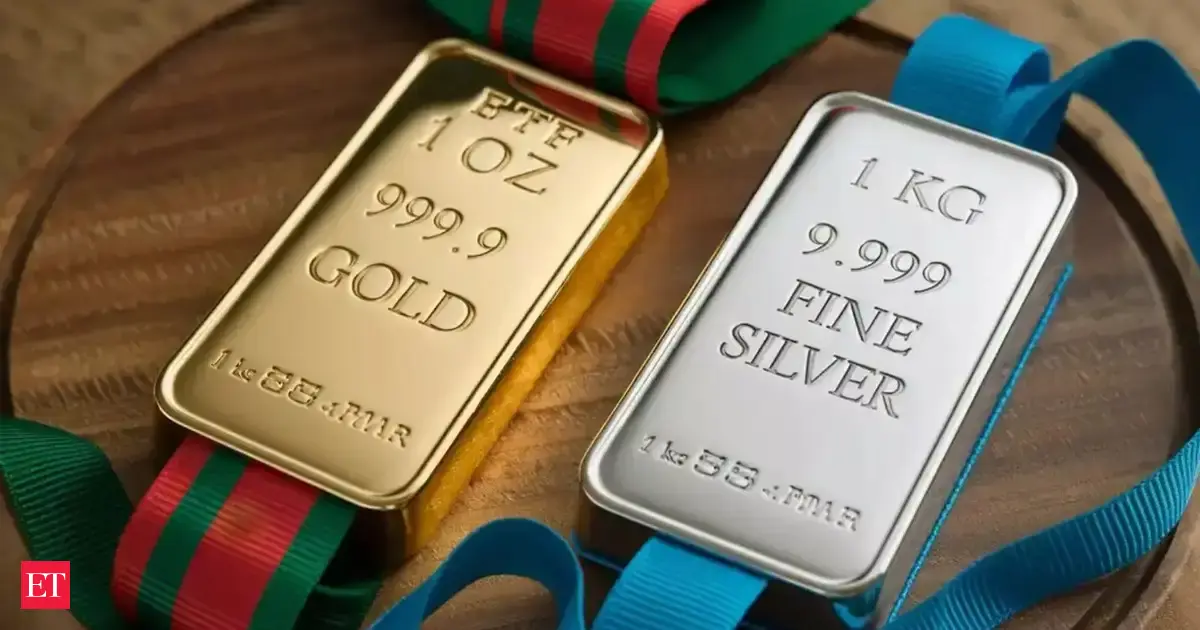
Gold and silver prices have recently taken a sharp hit, with gold plunging to $4,691.70 per ounce—a decline of 4.18%—and silver sliding to $70.68, down 8.91%. These figures mark the lowest levels for both metals in nearly a month. This sudden downturn is particularly perplexing given the backdrop of escalating tensions in the US–Iran conflict and the broader volatility in global markets, conditions that typically drive investors toward precious metals. Instead, the current market dynamics are leading to a crash in gold and silver prices, leaving many investors questioning the underlying causes.
Current Market Snapshot
As of today, gold (GC00) has fallen to $4,691.70, down $204.50, while silver (SI00) has dropped to $70.68, losing $6.91. The weakness isn’t confined to these two metals; platinum (PL00) has slipped to $1,938.20, down 5.76%, and copper (HG00) has also edged lower to $5.44, down 2.78%. This broader commodities pullback signals a significant shift in market sentiment.
The Driving Forces Behind the Decline
Inflation and Rising Oil Prices
The primary driver behind the falling prices of gold and silver is the rising inflation, compounded by surging oil prices and a strengthening U.S. dollar. These factors are overpowering the traditional safe-haven demand for precious metals. As inflation rises, expectations for Federal Reserve rate cuts are fading, removing a crucial support pillar for bullion. In essence, macroeconomic pressures are currently outweighing geopolitical fears.
The Impact of Geopolitical Events
Historically, geopolitical crises have triggered safe-haven buying, pushing gold and silver prices higher. However, the current situation is different. Since late February, when tensions escalated, oil prices have surged dramatically, with Brent crude jumping over 40% and crossing the $100 mark. Instead of flowing into gold and silver, capital is being redirected into energy markets, creating an unusual dynamic where rising oil prices are negatively impacting gold and silver prices.
Analysts describe this as a “negative correlation,” where oil has become the dominant safe-haven asset in the current conflict, sidelining traditional metals. Gold has recorded six consecutive sessions of losses, marking its longest losing streak since 2024, indicating a broader shift in investor sentiment.
The Role of Inflation and Interest Rates
The current inflationary environment is a significant factor affecting gold and silver prices. Rising energy prices are fueling inflation fears globally, leading markets to price out potential interest rate cuts by the Federal Reserve. This is a crucial turning point, as gold and silver prices typically rise when rates are falling. When the outlook for rate cuts diminishes, yields on interest-bearing assets remain elevated, making them more attractive compared to non-yielding metals.
Earlier this year, gold surged above $5,600 and silver crossed $120, driven partly by expectations of easier monetary policy. However, as those expectations have reversed, both metals have seen sharp declines. In short, inflation is not aiding precious metals this time; instead, it is delaying the very rate cuts that usually support their prices.
The Strength of the U.S. Dollar
Another critical factor contributing to the decline in gold and silver prices is the strength of the U.S. dollar. A rising dollar makes gold and silver more expensive for global investors, thereby reducing demand. The current environment has seen the dollar strengthen significantly due to higher oil prices, persistent inflation, and stable interest rate expectations. This inverse relationship is well-established: a stronger dollar often leads to weaker metals prices, and this pattern is clearly evident now.
Despite ongoing geopolitical uncertainty, investors are favoring the dollar and oil over gold and silver, marking a critical shift in market preferences.
Future Outlook: Recovery or Continued Decline?
The future of gold and silver prices hinges heavily on macroeconomic signals rather than geopolitical events alone. Currently, the outlook remains uncertain and volatile. If inflation continues to rise and oil prices remain elevated, gold and silver prices may stay under pressure. Analysts predict “choppy” trading conditions, where prices fluctuate unpredictably without a clear upward trend.
However, there is a potential path to recovery. If the Federal Reserve signals rate cuts again or if the U.S. dollar weakens, gold and silver prices could rebound quickly. Safe-haven demand has not disappeared; it has merely been redirected.
Market sentiment will also play a crucial role. If investors begin to perceive metals as undervalued after this correction, buying interest could return. For now, though, the dominant forces are still working against gold and silver prices.
Investor Sentiment and Market Behavior
Investors are actively searching for answers regarding why gold and silver prices are crashing during a time of war. The answer lies in a rare combination of rising oil dominance, strong dollar momentum, and fading rate cut expectations. Many are also questioning whether this represents a buying opportunity. While prices have dropped significantly, the broader trend suggests caution. Without supportive macro conditions, gold and silver prices may struggle to sustain a rally.
Another key question is whether this signals a long-term shift in market behavior during conflicts. While it may be premature to draw conclusions, current trends indicate that traditional safe-haven patterns are evolving.
In conclusion, gold and silver prices have always been influenced by multiple factors, but the current situation underscores the power of macroeconomics. Even amidst geopolitical crises, inflation and interest rates are taking center stage, reshaping the landscape for precious metals. Investors must remain vigilant and adaptable as they navigate this complex market environment.



 English