


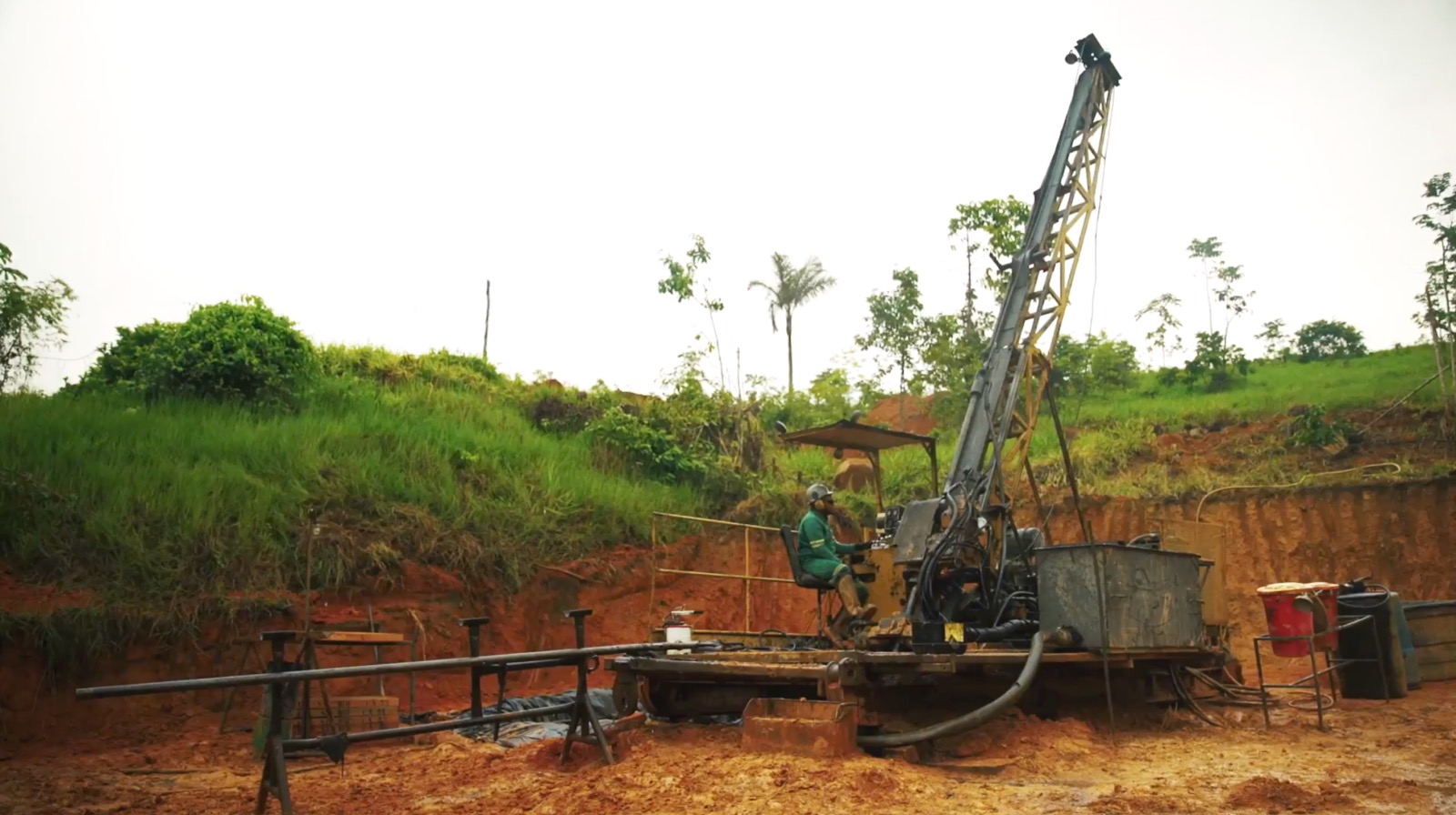
Serabi Gold (LSE: SRB), a prominent player in the Brazilian gold mining sector, has recently announced a stellar performance for 2025, producing 44,000 ounces of gold—surpassing its guidance and setting a new company record. This achievement comes alongside a remarkable increase in cash reserves, which soared from $20 million to $54 million, even as the company funded a $12 million exploration program. With ambitious targets set for the future, Serabi is poised for significant growth, aiming to produce between 54,000 and 57,000 ounces in 2026, and ultimately reaching 70,000 to 80,000 ounces through strategic plant expansions and the potential restart of the Sao Chico mine.
Record 2025 Performance: Setting New Benchmarks
Serabi Gold’s 2025 performance marked a watershed moment in its history. The company not only exceeded its production targets but also generated substantial cash flow, showcasing operational excellence amid favorable market conditions. The average realized gold price for the year was $3,480 per ounce, a figure that often gets overshadowed by the year-end surge to $4,500. This financial transformation was evident as quarterly profits increased significantly, with projections for Q1 2026 profits reaching between $13 million and $14 million.
The operational improvements were not limited to production volumes. Quarterly output stabilized at approximately 12,000 to 13,000 ounces, demonstrating consistency and reliability. Additionally, Serabi retired its remaining $7 million in debt in January 2026, achieving a debt-free balance sheet that enhances its financial flexibility.
Strategic Production Roadmap: From 44,000 to 100,000 Ounces
Serabi’s growth strategy is meticulously crafted, focusing on both immediate and long-term production increases. For 2026, the company has set a production guidance of 54,000 to 57,000 ounces, representing a 23-30% increase over 2025. This growth will be driven by enhancements in plant throughput and mine productivity, with expectations for stronger performance in the latter half of the year.
A key component of this expansion is the installation of a fourth ball mill at the Palito processing plant, scheduled for completion in Q3 2026. This project leverages equipment from the redundant Coringa plant, significantly reducing capital requirements. The additional milling capacity will allow Serabi to process stockpiled material from both Coringa and Sao Chico, facilitating increased production.
Looking beyond 2026, Serabi aims to ramp up production to 70,000-80,000 ounces annually, supported by a resource base projected to grow to 1.6 million ounces. The potential restart of the Sao Chico mine, previously deemed marginal at lower gold prices, has become increasingly viable in the current market.
Cost Discipline: The Foundation of Margin Expansion
One of the standout features of Serabi’s performance is its ability to maintain stable costs despite inflationary pressures affecting the broader mining sector. Approximately 65% of the company’s total costs are fixed or regulated, primarily comprising labor, diesel, and power. Labor costs, governed by collective agreements with the national mine workers’ union, typically see predictable annual increases of 7-8%. Diesel prices, heavily regulated by the Brazilian government, have remained stable due to historical resistance to price hikes.
This cost predictability allows Serabi to capture nearly all gold price appreciation as margin expansion. With gold prices remaining above $4,000 in early 2026, the company stands to benefit significantly from each incremental dollar increase in gold prices.
Resource Expansion: Building the Foundation for Sustainable Growth
Serabi’s resource growth strategy is integral to its multi-year production expansion plan. The company is executing a two-year, $24 million exploration program aimed at expanding resources at both Palito and Coringa. The goal is to increase the total resource inventory from approximately 1 million ounces to between 1.5 and 2 million ounces by the end of 2026.
Scheduled resource updates in March 2026 are expected to show progress toward the 1.3 million ounce milestone. The disciplined approach to exploration, characterized by a “drill-analyse-drill” methodology, ensures that the company maximizes return on capital while minimizing execution risk.
Ore Sorting Technology: Unlocking Mechanization and Safety Benefits
A significant technological advantage for Serabi is its ore sorting capability at Coringa. This technology enhances operational efficiency by allowing higher-grade material to be processed while discarding waste at the source. More importantly, it enables Serabi to pursue greater mechanization, reducing labor intensity and improving safety.
By employing ore sorting, the company can transition from traditional, labor-intensive mining methods to more mechanized approaches, enhancing both productivity and safety.
Capital Allocation: Balancing Growth Investment with Shareholder Returns
With a strong cash generation and a debt-free balance sheet, Serabi faces the challenge of deploying capital across competing priorities. The company’s strategy reflects a balanced approach, funding organic growth while also returning capital to shareholders. All capital expenditures, including the fourth ball mill installation and exploration programs, are being financed from operating cash flow without the need for additional equity or debt.
Serabi has committed to returning approximately 25% of its 2025 free cash flow to shareholders through dividends and/or share buybacks. This commitment was established during the 2025 secondary offering, which facilitated liquidity for two major shareholders.
Coringa Permitting: De-Risking the Key Asset
The Coringa project represents both Serabi’s most significant asset and its primary permitting challenge. The decision to truck ore to Palito for processing has simplified the permitting process, eliminating the need for complex water discharge permits. Currently, three key permitting milestones remain for full licensing at Coringa, including a land use agreement with INCRA and negotiations with local indigenous communities.
Achieving full permitting resolution would remove a significant discount factor from Serabi’s valuation, providing long-term operational certainty for what is currently the company’s highest-grade asset.
The Investment Thesis for Serabi Gold
Exceptional Leverage to Gold Prices: With a flat cost structure, Serabi captures nearly all gold price appreciation as margin expansion.
Self-Funded Growth Without Dilution: The debt-free balance sheet allows for all expansion capex to be funded internally, supporting significant production growth.
De-Risked Production Growth: A clear path exists for increasing production from 44,000 ounces in 2025 to 54,000-57,000 ounces in 2026 and beyond.
Resource Growth Underpinning Long-Term Production: A disciplined exploration program aims to expand resources significantly, supporting sustainable production scaling.
Shareholder Return Commitment: A commitment to return 25% of free cash flow to shareholders provides an income component while maintaining growth investment capacity.
Coringa Permitting Catalyst: Final permitting resolution expected in 2026 could enhance valuation and operational certainty.
Mechanization Initiatives: Ore sorting technology improves safety and efficiency, supporting production growth.
Macro Thematic Analysis
Serabi Gold exemplifies how established mid-tier producers in stable jurisdictions can capitalize on elevated gold prices through operational leverage. With 65% of costs fixed or regulated in Brazil, the company captures margin expansion directly proportional to gold price appreciation. The current environment, with gold prices sustaining above $4,500 per ounce, creates exceptional cash generation opportunities for debt-free producers with near-term growth potential.
For investors seeking leveraged gold exposure without exploration risk, Serabi Gold presents a compelling investment case, characterized by proven expansion pathways and a commitment to shareholder returns.
TL;DR
Serabi Gold achieved record performance in 2025 with 44,000 ounces produced and cash reserves growing from $20 million to $54 million. The company targets a 23-30% production increase in 2026, fully self-funded from operations. With stable costs and a debt-free balance sheet, quarterly profits are projected to reach $13-14 million. Serabi plans to return 25% of 2025 free cash flow to shareholders while investing $12 million in exploration to grow resources from 1 million to 1.6 million ounces, supporting a roadmap to 70,000-100,000 ounces per year by 2027-2028.


 English