


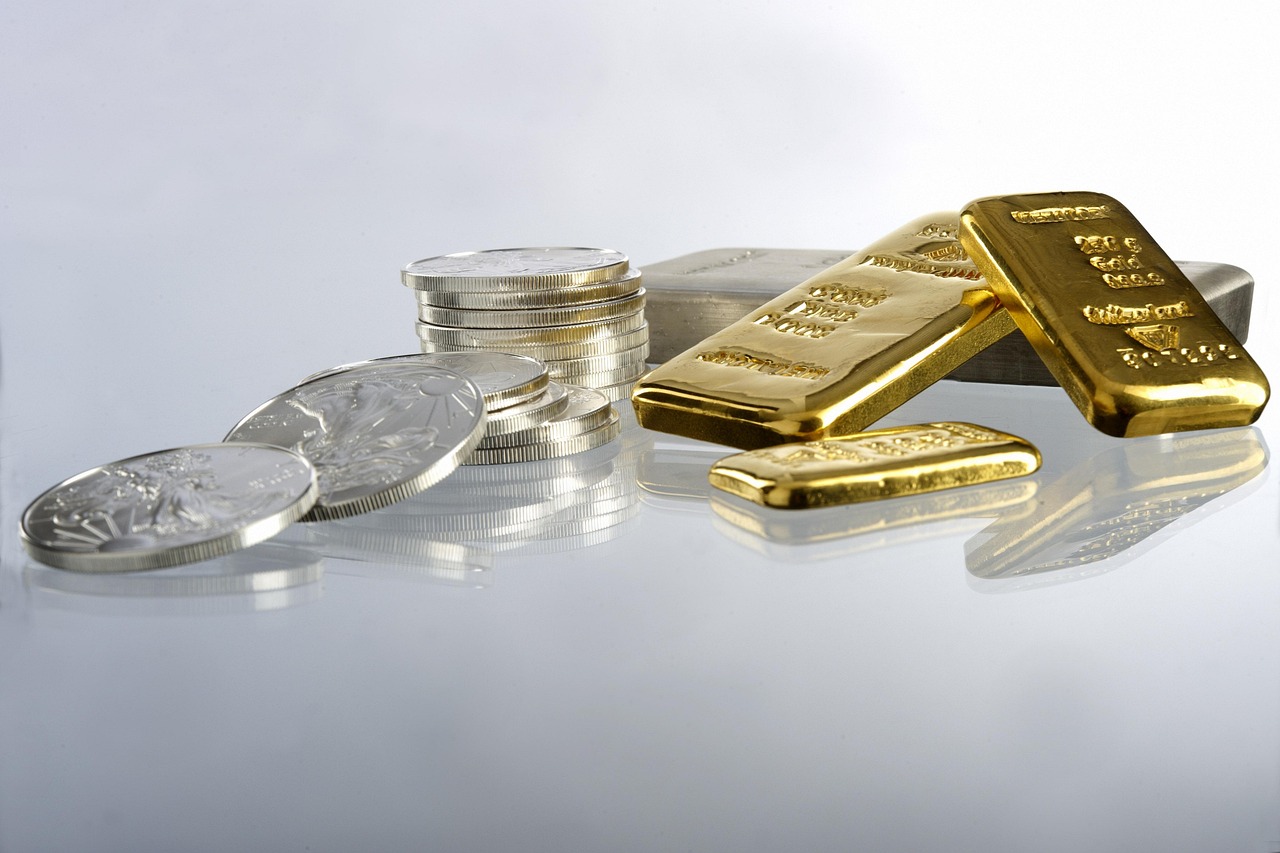
On Tuesday, gold and silver prices experienced significant declines, driven by a stronger U.S. dollar and a cautious approach from investors ahead of key economic data releases. The precious metals market faced additional pressure from reduced trading activity during China’s Lunar New Year, which dampened demand and contributed to the downward trend in bullion prices.
Market Overview
As of 17:26 ET (22:26 GMT), spot gold fell by 2.3%, settling at $4,877.40 per ounce. April gold futures also saw a decline, dropping 3% to $4,896.10 per ounce. Silver prices were particularly hard-hit, with spot silver sliding 4% to $73.5390 per ounce. Platinum prices followed suit, with spot platinum decreasing by 2.7% to $2,020.60 per ounce. This marked a notable shift in the market, as both gold and silver slipped below critical psychological levels, raising concerns among investors.
Key Factors Influencing Prices
Strengthening U.S. Dollar
The primary driver behind the decline in precious metals was the strengthening of the U.S. dollar. A robust dollar typically makes gold and silver more expensive for holders of other currencies, leading to reduced demand. As the dollar gained strength, investors began to reassess their positions in the precious metals market, contributing to the downward pressure on prices.
Reduced Demand from Asia
The ongoing Lunar New Year celebrations in China further complicated the situation. Traditionally, this period sees a slowdown in trading activity, which has historically affected demand for gold and silver. Analysts noted that the softer physical demand from Asia played a significant role in the recent price declines, particularly for silver, which is often more sensitive to changes in industrial demand.
Market Sentiment and Future Outlook
Market analysts are divided on the future trajectory of precious metals. Ralph Aldis, a portfolio manager at U.S. Global Investors, highlighted the uncertainty surrounding whether the current pullback represents a buying opportunity or if further declines are imminent. The market is closely watching key indicators that could influence investor sentiment.
Chinese Gold Accumulation
Despite the recent downturn, there are indications that China may continue to play a significant role in the global gold market. Societe Generale estimates that China could accumulate up to 250 tons of gold in 2025, accounting for over one-third of global central bank demand. This potential for continued Chinese purchases into 2026, coupled with expectations of further U.S. interest rate cuts and increased federal spending, could provide longer-term support for bullion prices.
Geopolitical Tensions and Safe-Haven Demand
While geopolitical tensions often provide a safe-haven boost for precious metals, recent developments have had a limited impact. Reports of progress in U.S.-Iran nuclear talks in Geneva, where both parties reached a general agreement on guiding principles, have shifted investor focus away from geopolitical risks. Despite heightened military activity in the Middle East, the prevailing sentiment remains centered on monetary policy and economic indicators.
Upcoming Economic Data
Attention is now turning to upcoming U.S. economic data releases, which include industrial production figures, Federal Reserve meeting minutes, the PCE price index, and preliminary fourth-quarter GDP data. The ongoing uncertainty surrounding U.S. monetary policy, particularly following President Donald Trump’s nomination of Kevin Warsh as the next Fed Chair, continues to influence market sentiment regarding gold and silver.
Conclusion
In summary, the recent decline in gold and silver prices can be attributed to a combination of a stronger U.S. dollar, reduced demand from Asia, and cautious investor sentiment ahead of significant economic data releases. While uncertainty looms over the precious metals market, potential long-term support from Chinese gold purchases and shifts in U.S. monetary policy may offer a glimmer of hope for investors. As the market navigates these complexities, all eyes will be on upcoming economic indicators that could shape the future of bullion prices.



 English