


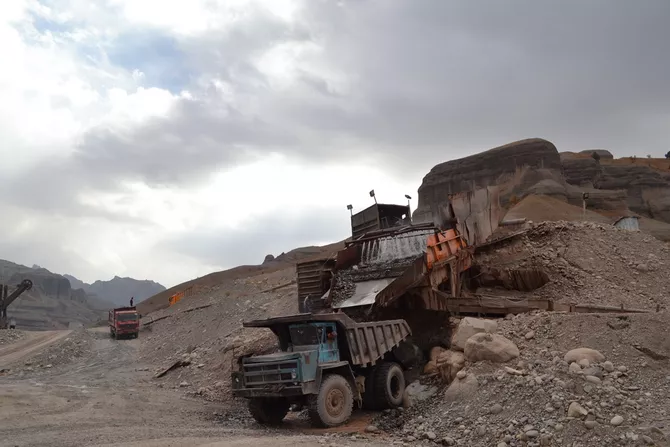
In a recent address to parliament, Tajik President Emomali Rahmon unveiled impressive statistics that underscore the remarkable growth of the country’s mining sector. This sector, once limited in scope, has seen a transformative surge in production, positioning Tajikistan as a burgeoning player in the mineral extraction industry.
A Surge in Production
Rahmon highlighted that the mining sector’s output has skyrocketed from 7.7 billion somonis (approximately $836.8 million) in 2020 to an anticipated 26 billion somonis (around $2.825 billion) by 2025. This represents a staggering 3.4-fold increase in just five years. Such growth is not merely a numerical achievement; it reflects the successful implementation of industrialization strategies that have modernized Tajikistan’s mining capabilities.
Diversification of Minerals
Historically, Tajikistan’s mining sector was limited to the extraction of gold, silver, and lead powder, with production capabilities stagnant since the early 1990s. However, Rahmon announced that by 2025, the country will produce 17 different minerals, showcasing a significant diversification of its mineral resources. Notably, gold output has increased sevenfold, silver sixfold, and lead powder ninefold compared to 1991 levels. This diversification is crucial for reducing economic vulnerability and enhancing the country’s export potential.
Doubling Down on Growth
The total output of the mining sector has more than doubled over the past seven years, reaching an impressive 66 billion somonis (approximately $7.172 billion). Looking ahead, Rahmon projected a further 22% growth in 2025 alone. This optimistic outlook is underpinned by a commitment to modernize the sector and attract both domestic and foreign investments. The President emphasized the importance of full-cycle processing of local raw materials, which not only adds value but also creates jobs and stimulates local economies.
A New Mining Strategy
To ensure sustainable growth, Rahmon proposed a new mining strategy for 2026-2030. This strategy aims to strengthen regulatory frameworks, improve environmental standards, and enhance legislation governing the mining sector. By focusing on responsible mining practices, Tajikistan seeks to balance economic growth with environmental stewardship, a crucial consideration in today’s global landscape.
Expanding Industrial Horizons
Beyond mining, Rahmon called for the development of light industries, including textiles, footwear, and furniture. This diversification aims to boost employment, increase domestic production, and enhance export capabilities. The President set an ambitious target of at least 25% annual growth in industrial production from 2026 to 2030, emphasizing that investment and productivity will be the cornerstones of Tajikistan’s economic stability.
Conclusion
Tajikistan stands at a pivotal moment in its economic development, particularly within the mining sector. Under President Emomali Rahmon’s leadership, the country is poised for significant growth, driven by diversification, modernization, and strategic planning. As Tajikistan continues to harness its mineral wealth, the focus on sustainable practices and industrial expansion will be essential for ensuring long-term prosperity and stability. The future looks bright for Tajikistan, as it embarks on this transformative journey toward becoming a key player in the global mining industry.



 English